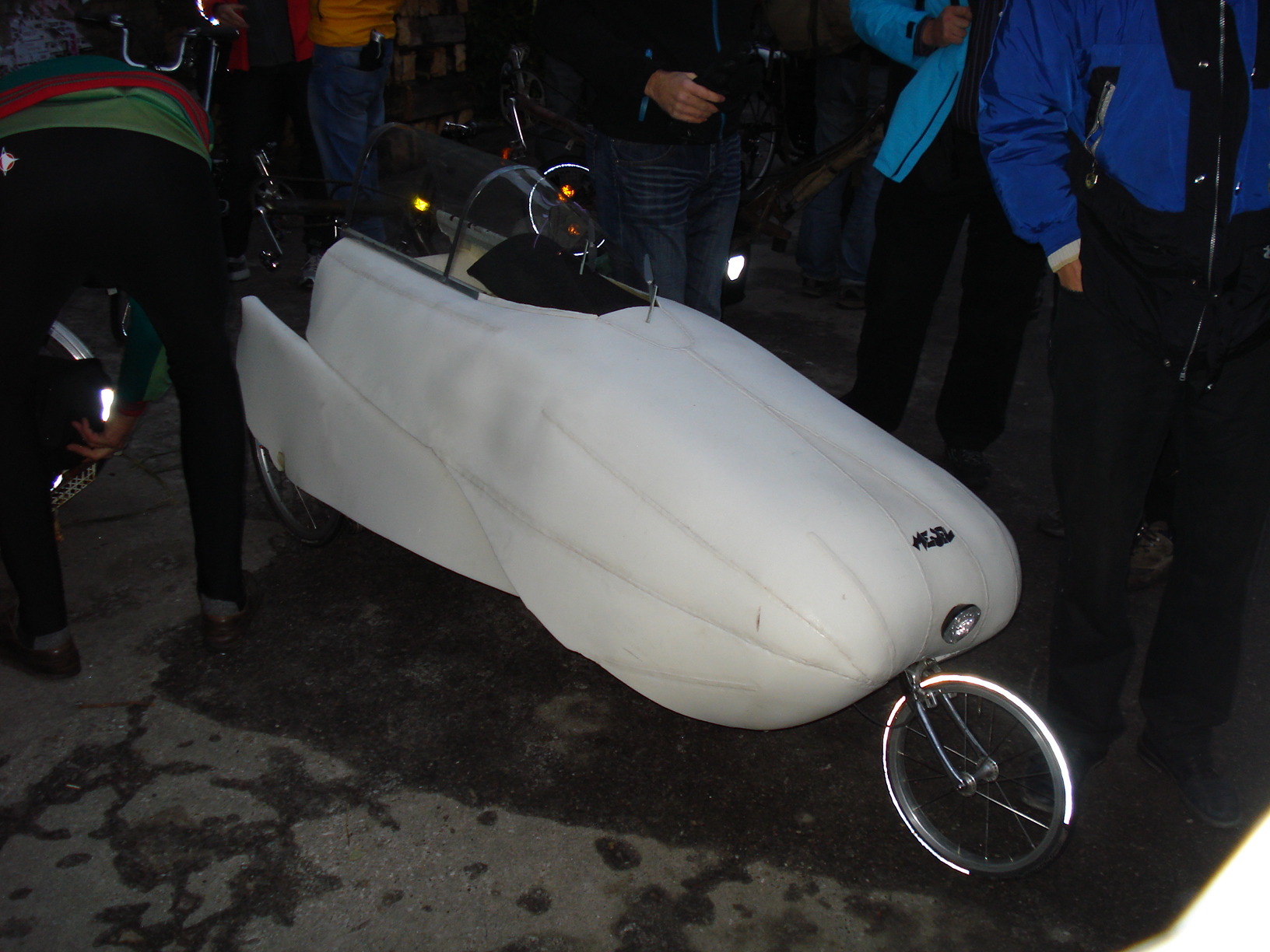
Harald Winkler’s MEUFL Velomobile

The velomobile conference served as the debut for several new velomobile designs from around the world and I found the most inspiring was Harald Winkler’s completely custom built 12kg velo, a vehicle so light that he began his presentation by carrying it on stage holding it high above his head.

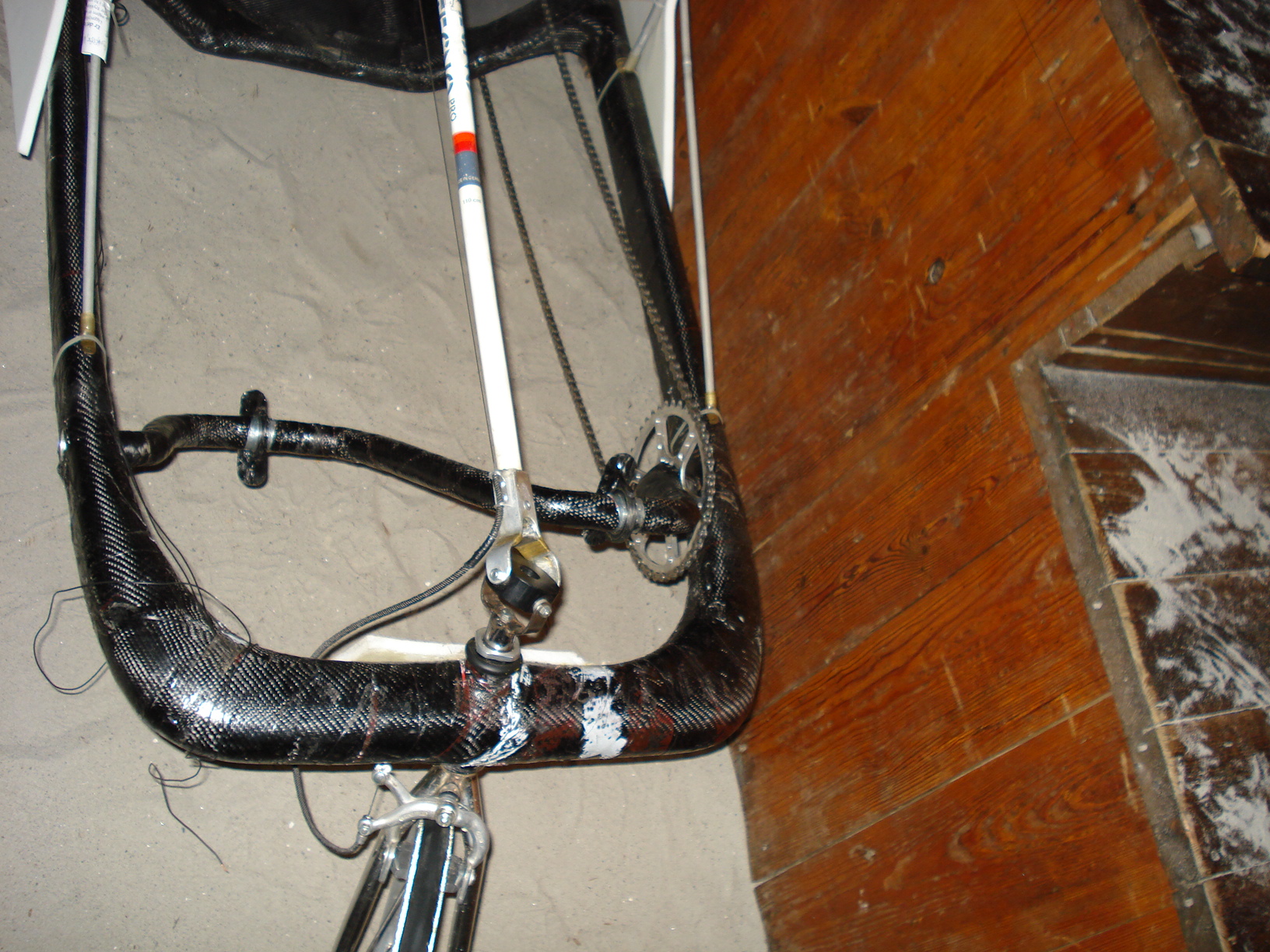
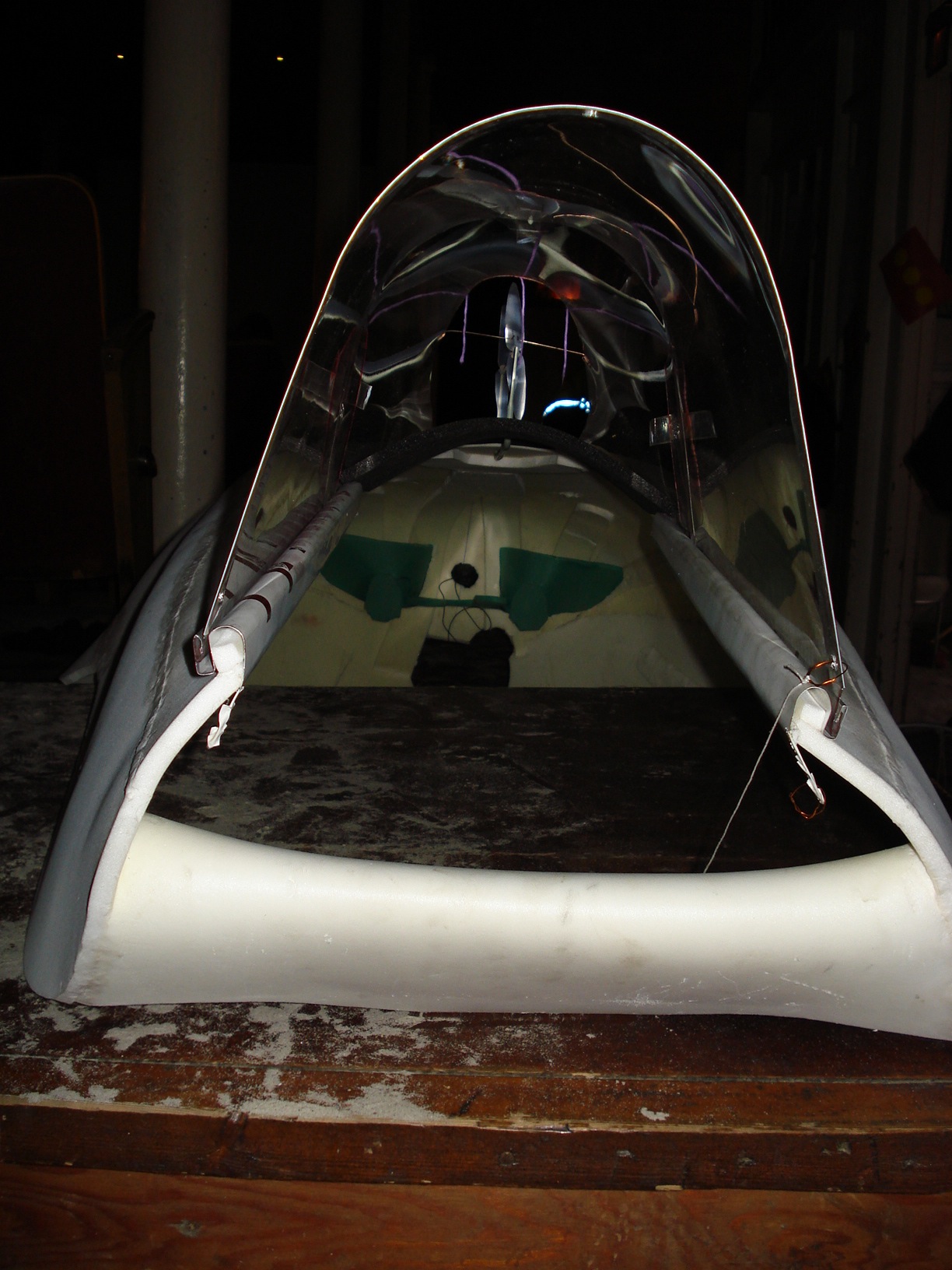
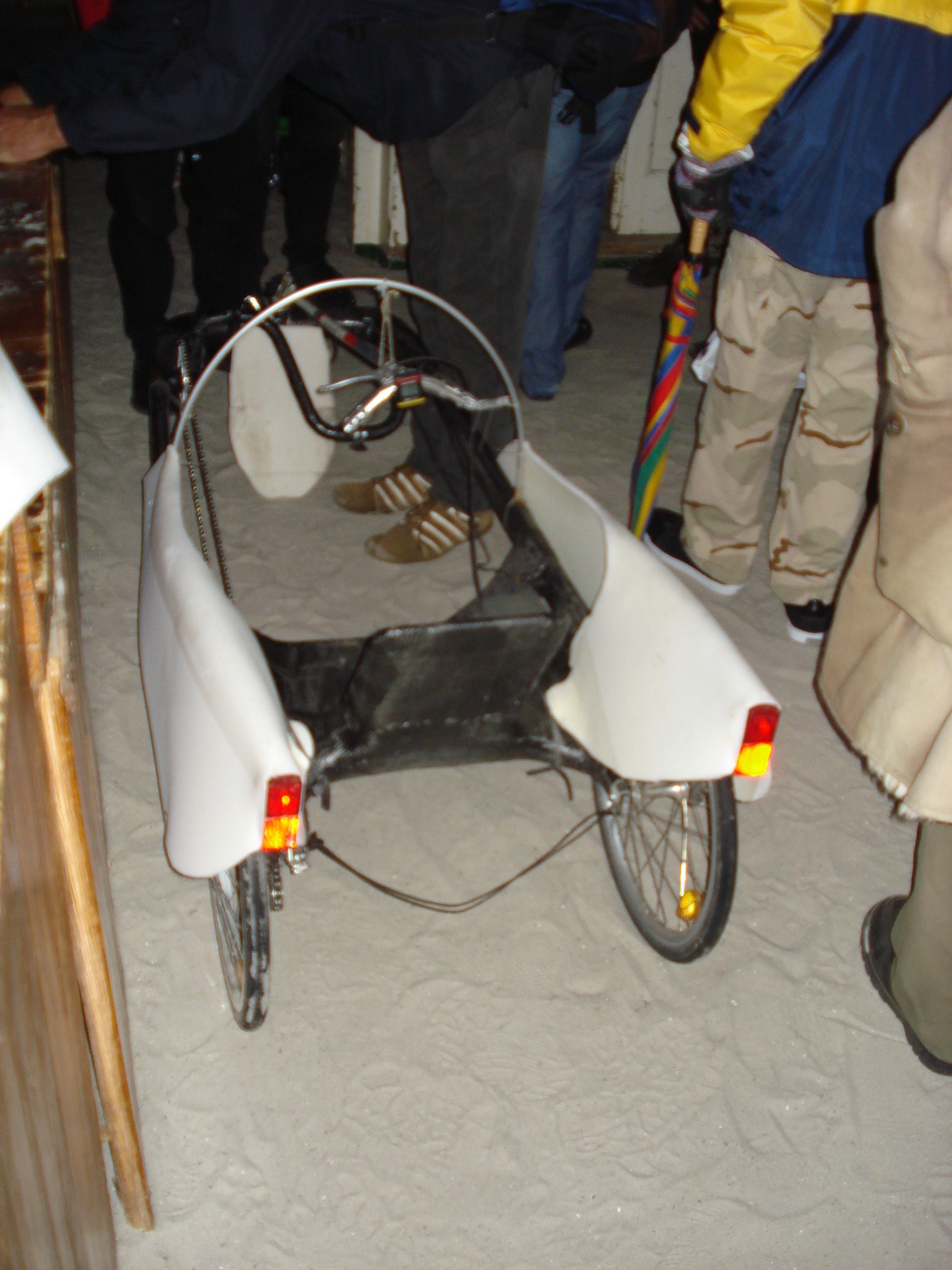
Harald’s velomobile was designed especially for geting around his hometown which has smooth roads but is hilly and has a lot of intersections.  Hence, the overriding concern was to reduce weight and make acceleration and getting up hills as easy as possible.  His design incorporates a carbon fiber perimeter frame/seat structure, a delta layout using an offset chain run to drive a single rear wheel and a foam body, employing his self-developed MEUFL foam technology, that weigh little more than 1.5kg.  Frontal area is extremely small due to its road-hugging narrow, low profile design as well as 16″ wheels that might just be the smallest ever used on a velomobile.

There were several other clever features such as custom made tires (larger diameter tires were sectioned and glued together to make high performance tires that are otherwise unavailable for 16″ wheels). a plastic steering u-joint with adjustable pre-load and most conspicuously, a couple of small propellers that produce a high pressure air bubble at the front of the windscreen, eliminating the need for windshield wipers to clear rain from the driver’s view.

As clever as the features included, the design is also notable for what it leaves out.  There is no suspension nor typical crank assembly; the pedals are carried by an s-shaped carbon fiber tube that transmits pedaling force to a sprocket mounted to the left-side carbon fiber spar, leaving the volume between the seat and crank completely unobstructed.  Besides making entry/egress much easier, to the user it becomes less a mechanical tool and much more a friendly consumer product designed to satisfy human needs first.

In many ways this vehicle would be impractical for American roads yet it fits its intended environment and Harald’s needs perfectly.  It is a great example of minimalist ingenuity and made me realize how complex the current Turanga design is, despite the fact that simplicity was one of its guiding design principles.  I’ve learned there’s always a little more that can be done to make less, if you catch my drift.

Harald’s paper, along with the other papers presented at the seminar, can be found here.

Posted in Velomobiles & HPVs | Tagged , , , , , , | 4 Comments

6th European Seminar on Velomobile Design

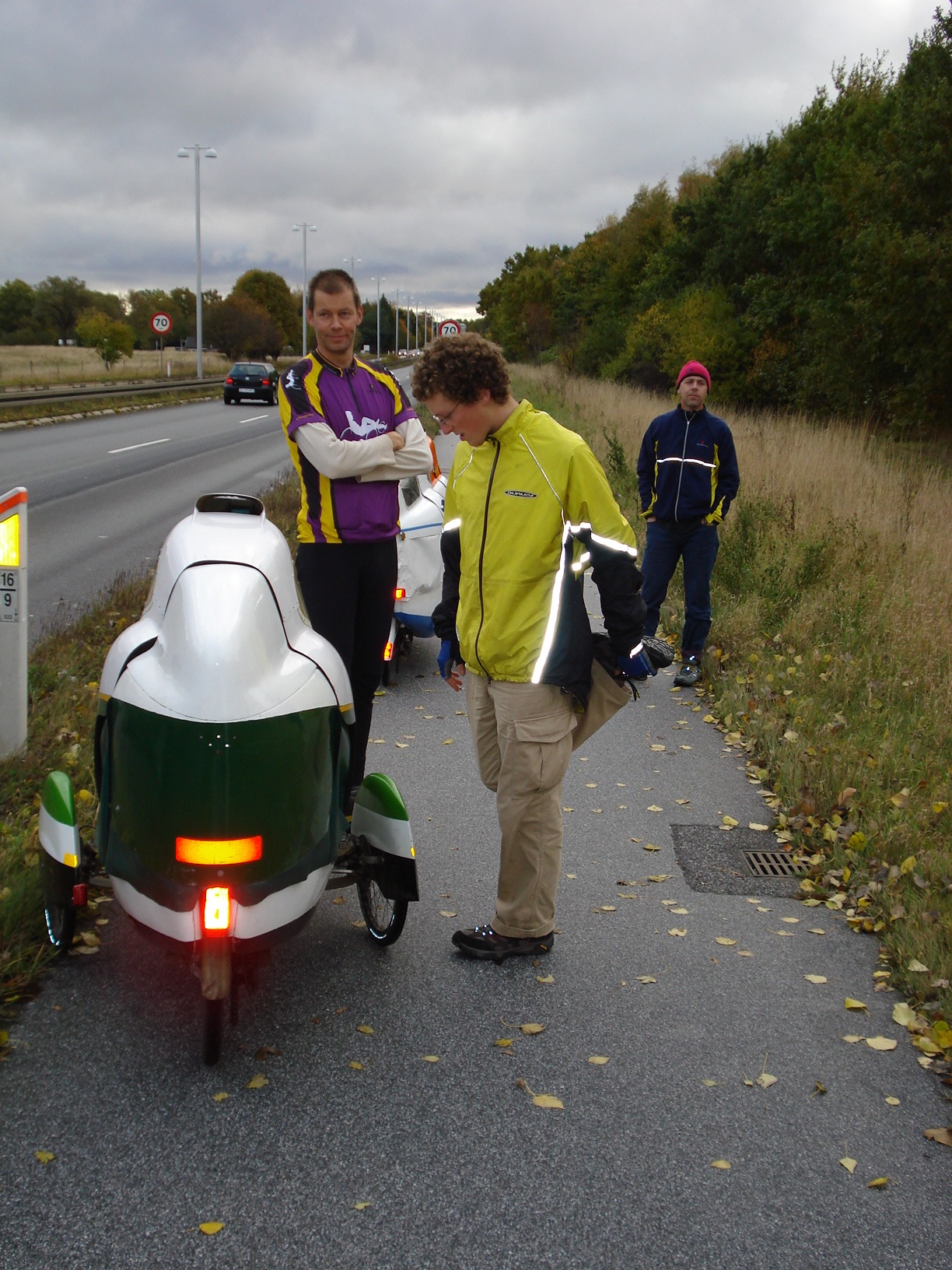
designseminar-smallThe 6th European Seminar on Velomobile Design, held in Copenhagen this past October 16-17, brought together velomobile enthusiasts, owners and builders from around the world to discuss the current state of the art and how velomobiles can build public visibility in proportion to the great utility that they can provide.  Every paper presented offered enlightening perspectives on, for example, design technology like Ingo Kollibay’s Four Wheeled Velomobiles, increasing social acceptance like Antal Joo’s and Gabor Joo’s Possibility and Situation of Velomobile Riding in Hungary and Jurgen Eick’s depiction of living with a velomobile as a primary vehicle for the last 20 years (Caution, large downloads).  Not to forget, I also presented a paper on the development of the Turanga velomobile.

The complete papers can be found here and I’ll be blogging about some of the most notable points of the whole trip over the next few weeks.
Posted in Velomobiles & HPVs | Tagged , , , | Comments Off on 6th European Seminar on Velomobile Design

Power of DC 2009 Autocross

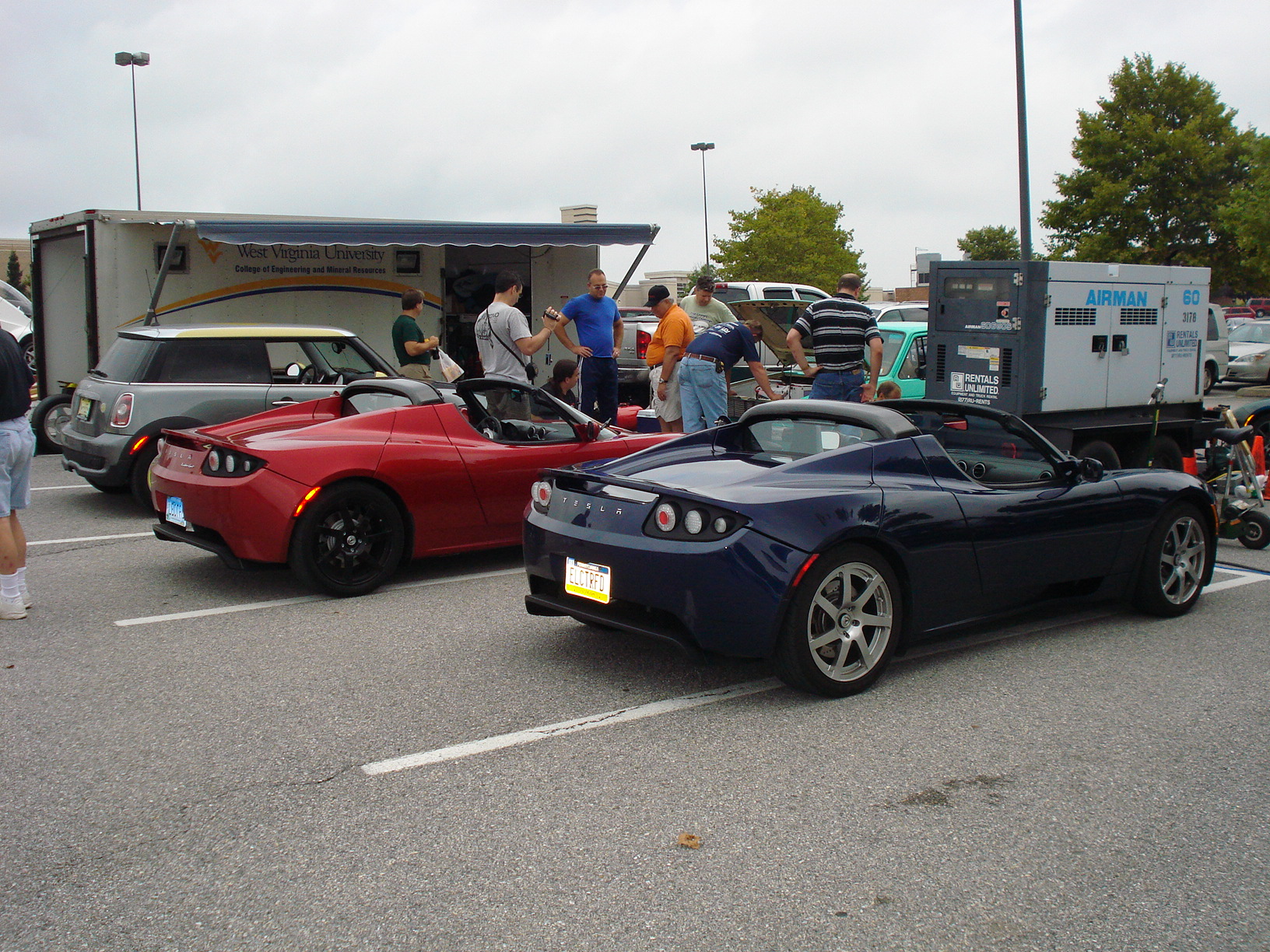
Though the eMR2 couldn’t be there, this Saturday’s Power of DC autocross event hosted a variety of factory and conversion EVs from all over the east coast.  Three Teslas, including a Sport model, tore around the course with the Sport model setting fastest time of the day by rounding the course in under 18 seconds. Though the Teslas set the pace, it was a Mini-E that set the record for the most runs as it rounded the track nearly  all afternoon.

Among the conversions, surprisingly it was a VW Rabbit pickup that cut the cleanest path around the cones despite it’s nearly 3/4 ton of batteries.  A sunburst yellow Destiny 2000 (based on a Pontiac Fiero chassis) gave it a run for the money but the Rabbit’s driver was an obviously experienced hand who could make the most of his car’s abilities.

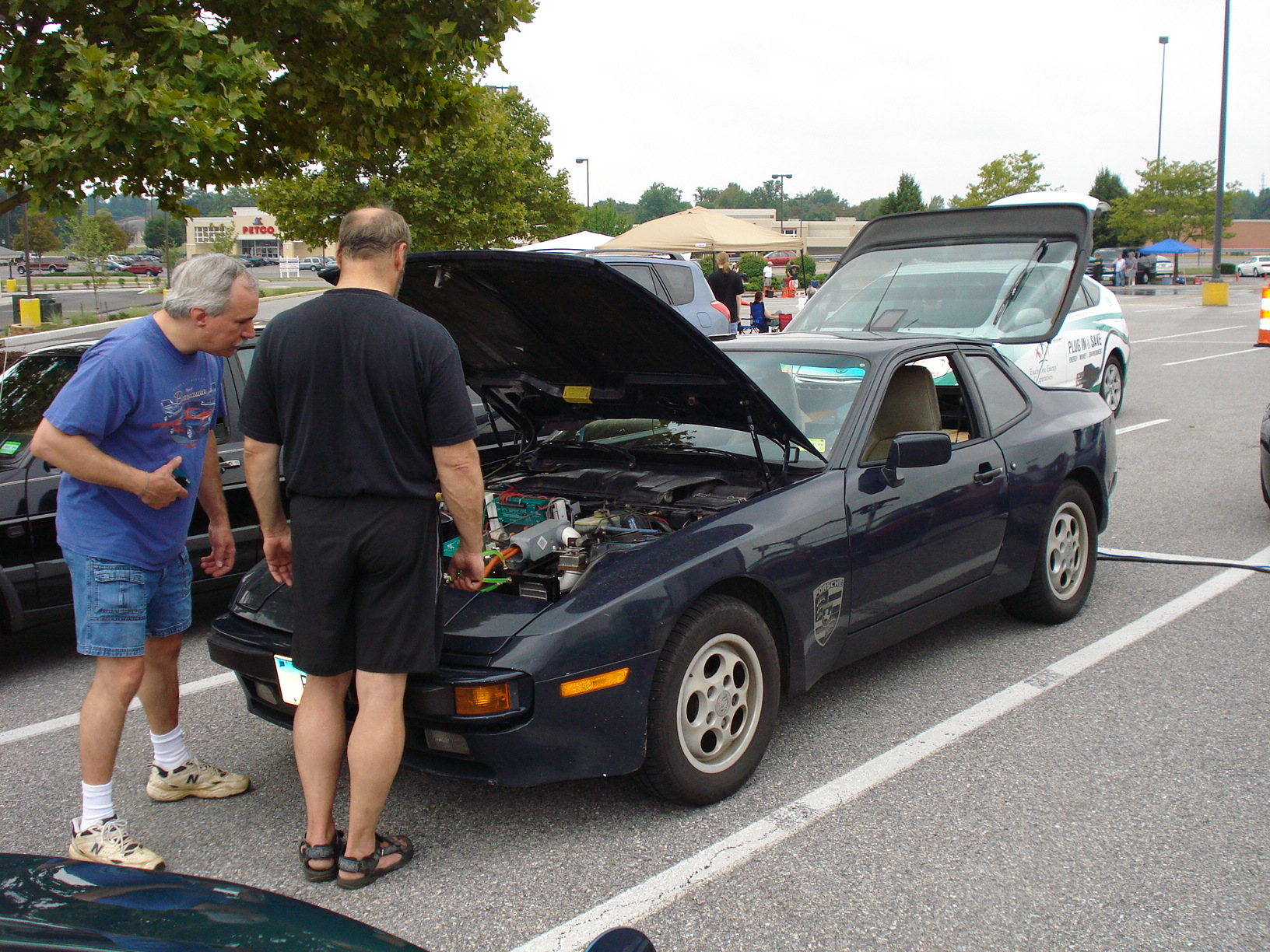
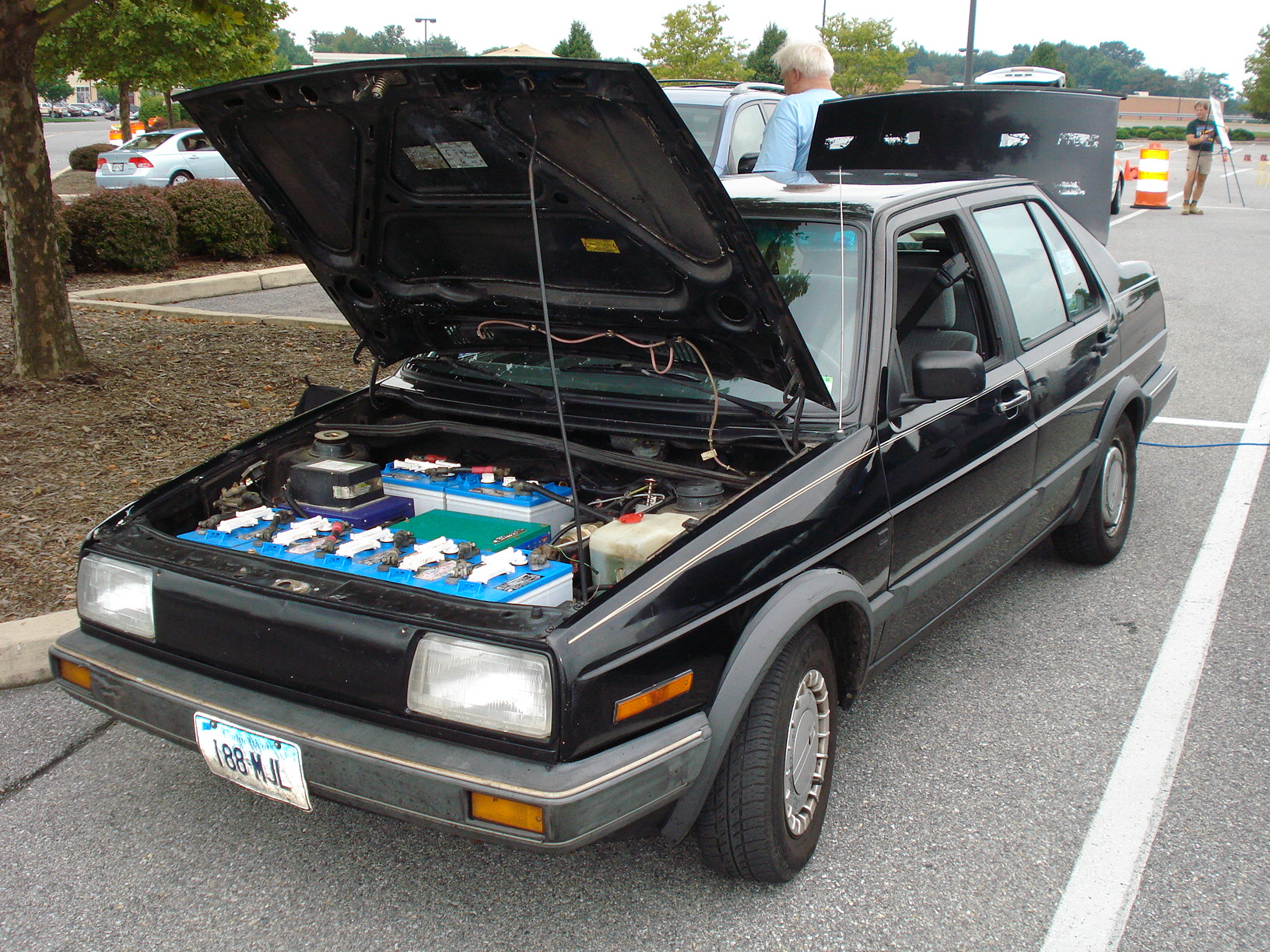
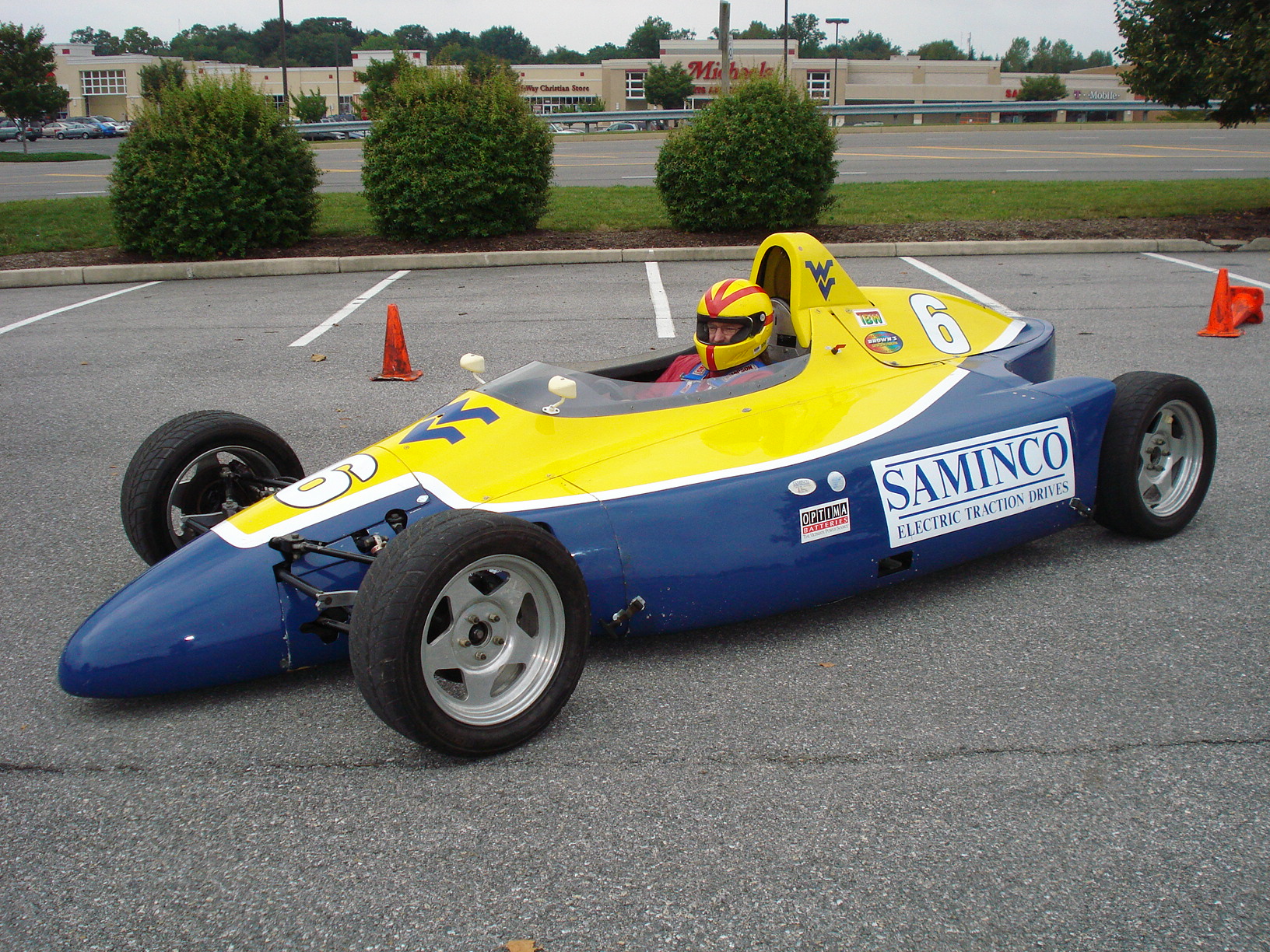
Other interesting vehicles that ran the course included the WVU Formula Lightning racecar, a Porsche 944 conversion and a daily driver VW Jetta.  Below the pictures are the times for all the day’s runners, courtesy of Chip Gribben.

AUTOCROSS
Saturday, August 29
place/et/driver/vehicle/runs

Production EVs
1) 17.761 – Dave Bolling – 2009 red Tesla Sport (31 runs)
2) 17.979 – Don Auker – 2008 blue Tesla (44 runs)
3) 18.718 – Tom Jamison – 2009 prismatic blue Tesla (19 runs)
4) 19.316 – Ken Barbour – 2009 Mini-E (64 runs)
5) 23.289 – Bryan Murtha – RAV-4 EV (5 runs)

Conversion EVs
1) 21.214 – Dave Cover – Porsche 944 (6 runs)
2) 21.948 – Alan Arrinson – VW Rabbit truck (13 runs)
3) 22.648 – Doug Stansfield – White Hyundai Tiburon (5 runs)
4) 23.441 – Bob Rice – VW Jetta (11 runs)
5) 24.842 – West Virginia University – Formula Lightning (9 runs)
6) 26.643 – Joe Lado – Destiny 2000 Fiero (24 runs)

Posted in EVs, Miscellanea | Tagged , , , , | Comments Off on Power of DC 2009 Autocross