If we can’t have the Redline at least we can learn about other cities making decisive infrastructure upgrades to improve accessibility, promote economic opportunity, reduce pedestrian fatalities and yes, reduce automobile traffic.
This is happening in Buffalo, NY of all places, and the webinar linked above reviews how the federal interstate system slowly drained Buffalo of residents who moved to the close suburbs during the white flight era, turning functional city blocks into commuter parking lots. The panel details a cooperative effort from a wide variety of local organizations to foster a more humanistic transportation landscape, building a system around human needs before technology.
Posted inMiscellanea|Comments Off on The Future of Mobility was 70 years ago
There’s a school of thought that thinks of design as primarily a visual medium.
Haven’t many of us been seduced by the thin, sleek profile and attractive finish of a MacBook enough to lay down the bills to buy one? The fit and finish are exquisite, yet the chintzy clatter from the keyboard come as a shock. The taps from the keyboard made me wonder, is this is quality computer with a dinky keyboard or just a nice shell enveloping sub-par components?
The contrapositive is when a mundane experience is ennobled by unexpectedly thoughtful touches. The morning commute can be the most forgettable part of every day but good design can leave subtle reminders that someone was thinking of you and wanted to make your experience more convenient, safer, or expressive.
During a trip to Montreal this summer I was struck by some very empathetic design elements in the transit system. Check out the slide show below.
Station doors
Image 1 of 6
There's never any ambiguity about whether one should push or pull on a door in the Montreal transit system. Simply follow the arrows to push on the right side of the door, whether coming or going. And you'll never run into someone going in the opposite direction.
(photo courtesy of wikipedia)
https://commons.wikimedia.org/wiki/File:Portes_papillon_station_namur_metro_de_montreal.jpg#filelinks
In the future, all your packages, food, and possibly children will be delivered by an intelligent, perceptive, box-on-wheels or flying machine that will gently deposit your package upon your doorstep and then float away.
That is the dream, and there are literally dozens of companies developing solutions for the most complicated and uncontrolled portion of the delivery chain. By uncontrolled, I mean in contrast to the massive automated sorting and scanning operations occurring inside carefully designed and efficiency-optimized distribution warehouses, the actual process of getting the object to your door is confoundingly complex and varied. Gates, curbs, stairs, weather, doors and other impediments to placing an object on the threshold demand that customers have to come to the sidewalk to receive their delivery, negating much of the claimed convenience.
Yet it is taken for granted that the postman and postwoman drop packages to your door everyday.
All this is to say that humans are very adaptable to unknown and changing contexts and conditions, qualities that the computer mind does not have (machine learning is an attempt to address this). This makes them very well suited to the task of last-mile delivery. So why not refine and leverage the part of the delivery equation that already works and address the noisy, polluting and obstructive part of the problem in a way that produces less emissions and better health outcomes for the worker?
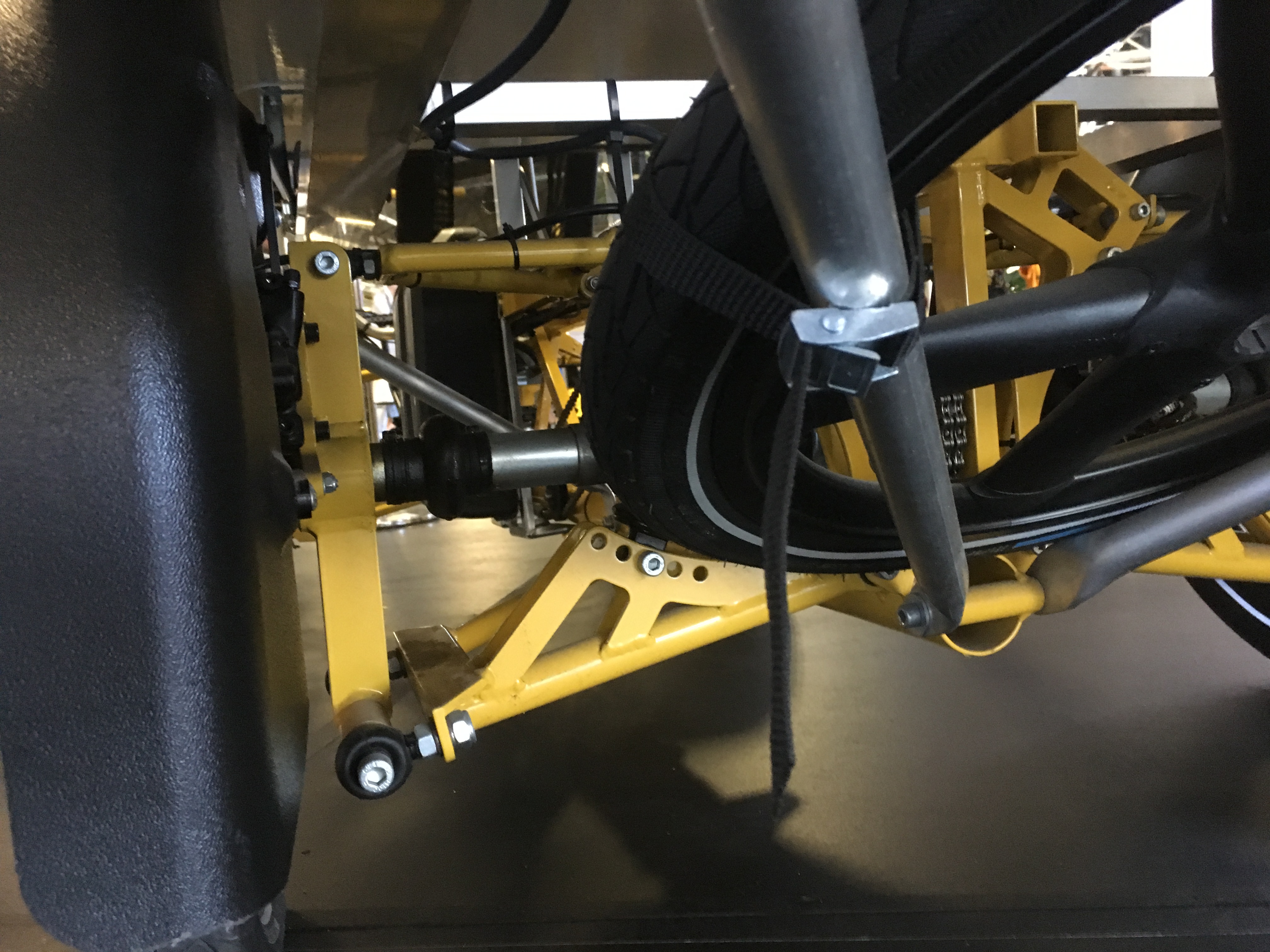
DHL’s last-mile delivery bike, along with similar efforts by UPS and DPD is the outcome of that line of thinking. Currently deployed in Europe, plans to rollout in NYC have been stymied by regulatory hurdles but are still in the works.
Combining the flexibility of a human deliverer in the loop with a vehicle that is safer for pedestrians and other road users, won’t block a lane of traffic at a stop, and improves the deliverer’s health is a GHG-reducing last mile delivery solution that can be implemented now.
Check out the gallery below and in a follow-on post I’ll get into the design details. These pics aren’t as well-composed or exposed as I’d like as they were taken in a dark exhibit hall near a bay door open to the very bright day outside at the FormulaE race in NYC.